

Violin Concerto in E minor, Op. 64 ——The Music Begins to Speak
メンデルスゾーン:ヴァイオリン協奏曲 ホ短調 Op.64 ──音は、語りはじめる
フェリックス・メンデルスゾーン(1809–1847)が生きた19世紀前半は、ナポレオン戦争後の秩序回復と市民社会の成熟が進む時代であった。音楽の分野では、古典派の形式美を基盤としながら、より内面的な感情や詩情を重視するロマン派の感性が広がりつつあった。
その中でメンデルスゾーンの音楽は、過度な劇的表現に依ることなく、構造の明晰さと抒情の自然さとを高い水準で両立させている点に特徴があるとされる。彼の作品には、感情の流れと形式的な均整とが無理なく共存しており、本協奏曲はその特質が端的に表れたものといえる。
1844年に完成されたこの作品は、ヴァイオリニストのフェルディナント・ダヴィッドとの緊密なやり取りを経て形づくられた。冒頭から独奏が現れる構成や、カデンツァの配置などに見られる工夫は、技巧的効果を狙うものというより、音楽全体の流れを損なわないための構造的配慮として理解される。こうした点にも、表現と構築とを一体のものとして扱う作曲者の姿勢がうかがえる。
この協奏曲において特に印象的なのは、音が語るように流れていく、そのあり方である。旋律は単に美しく響くのではなく、前後の関係の中で必然的に導かれ、全体として一つの時間の流れを形づくっていく。音は孤立せず、常に次の音へと向かう力を内に含んでいる。
そして今回、この作品を演奏するのが、三浦文彰氏である。三浦氏は2009年、16歳でハノーファー国際ヴァイオリン・コンクールにおいて最年少優勝を果たし、その後も国内外で活躍を続けている。
その活動の中で、2016年に放送された真田丸でソロ・ヴァイオリンを担当したことは、三浦氏の演奏の特質を示す一例である。NHK大河ドラマは、歴史上の人物を長期にわたって描く作品群であり、音楽は物語の展開や登場人物の内面を支える重要な要素となっている。《真田丸》においても、ヴァイオリンは人物の感情の揺れや状況の変化を繊細に映し出す役割を担っていた。
メンデルスゾーンの協奏曲は、長い時間をかけて多くの演奏家に弾き継がれてきた作品である。その積み重ねの中で形づくられてきた音楽をとりあげることは、50年という時間を歩んできたオーケストラにとって、ごく自然な選択のようにも感じられる。
メンデルスゾーンが描いた音楽は、外面的な効果ではなく、内側から形づくられる均衡によって成立している。その音楽に三浦文彰氏が向き合うとき、そこには技巧の先にある必然としての音楽が、静かに、しかし確かに立ち上がるだろう。
Felix Mendelssohn (1809–1847) lived during the first half of the nineteenth century, a period marked by the restoration of order following the Napoleonic Wars and the gradual maturation of bourgeois society. In music, while the formal clarity of the Classical tradition remained a foundation, a new Romantic sensibility—one that placed greater emphasis on inner emotion and poetic expression—was steadily emerging.
Within this context, Mendelssohn’s music is often noted for achieving a high degree of balance between structural clarity and natural lyricism, without resorting to excessive dramatic expression. In his works, the flow of emotion and formal proportion coexist seamlessly, and this concerto stands as a particularly eloquent example of that quality.
Completed in 1844, the concerto was shaped through close collaboration with the violinist Ferdinand David. Its innovations—such as the immediate entrance of the soloist at the opening and the placement of the cadenza—are not merely devices for virtuosic display, but can instead be understood as structural considerations designed to preserve the continuity of the musical flow. In these features, one can discern the composer’s approach of treating expression and construction as an integrated whole.
What is especially striking in this concerto is the way in which the music seems to “speak” as it unfolds. The melodies do not simply resonate beautifully in isolation; rather, they arise inevitably from their relationships to what precedes and follows, forming a continuous and unified flow of time. Each note contains within it a directional impulse, leading naturally to the next.
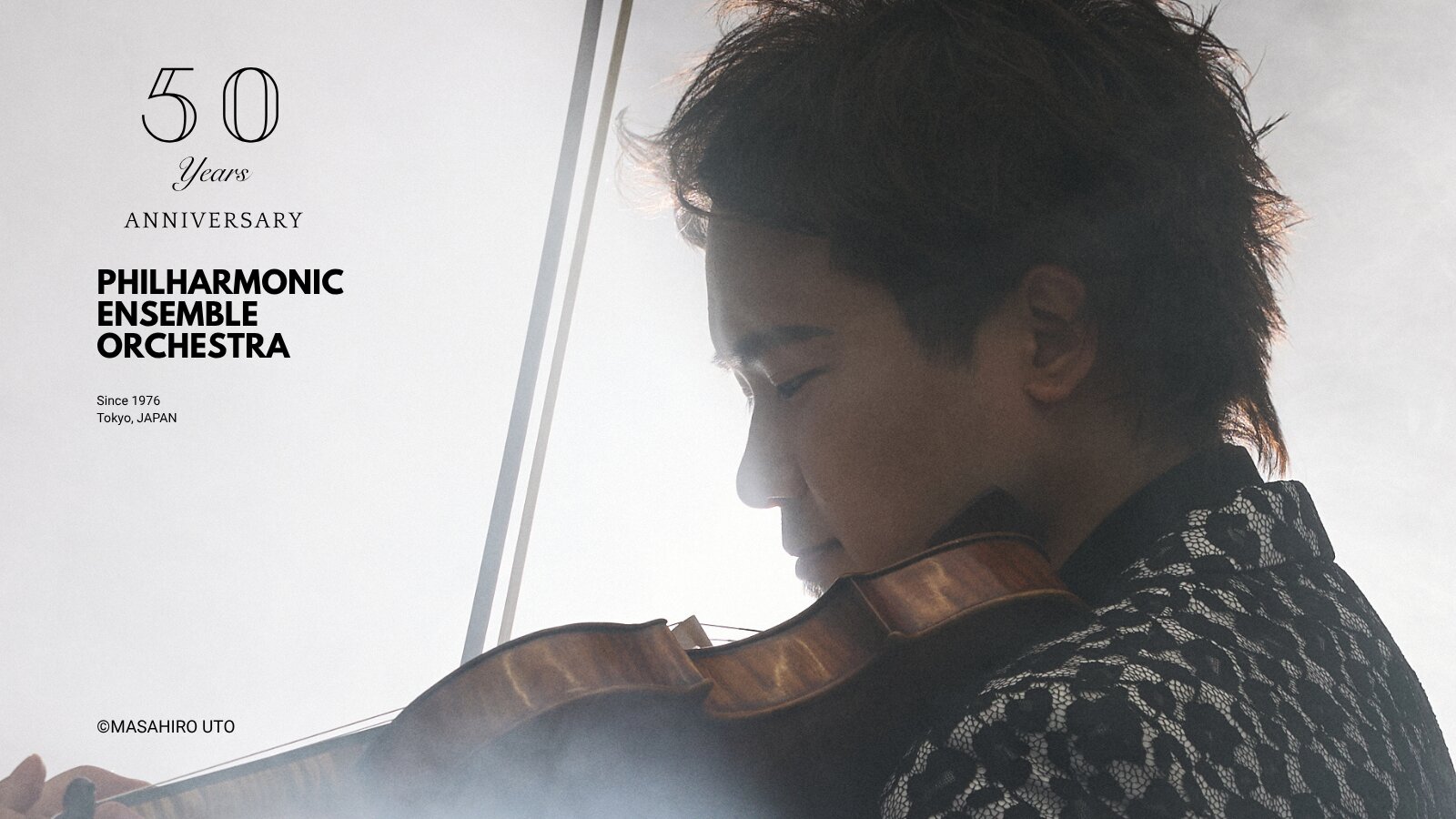
The soloist for this performance is Fumiaki Miura. In 2009, at the age of sixteen, Miura became the youngest-ever winner of the Hannover International Violin Competition, and he has since maintained an active international career.
One notable example of his artistic profile is his contribution as solo violinist to the 2016 NHK historical drama Sanada Maru. In such long-form historical narratives, music plays a crucial role in shaping both dramatic development and the inner lives of the characters. In Sanada Maru, the violin served as a sensitive medium, reflecting subtle emotional shifts and changes in circumstance.
Mendelssohn’s concerto is a work that has been passed down through generations of performers over a long span of time. To engage with such a piece—formed through this accumulation of interpretive history—seems a natural choice for an orchestra marking fifty years of its own journey.
The music Mendelssohn created is not sustained by outward effect, but by an inner equilibrium from which its form arises. When Fumiaki Miura approaches this work, one may expect that beyond technique, the music will emerge as something inevitable—quietly, yet with undeniable presence.
No responses yet